

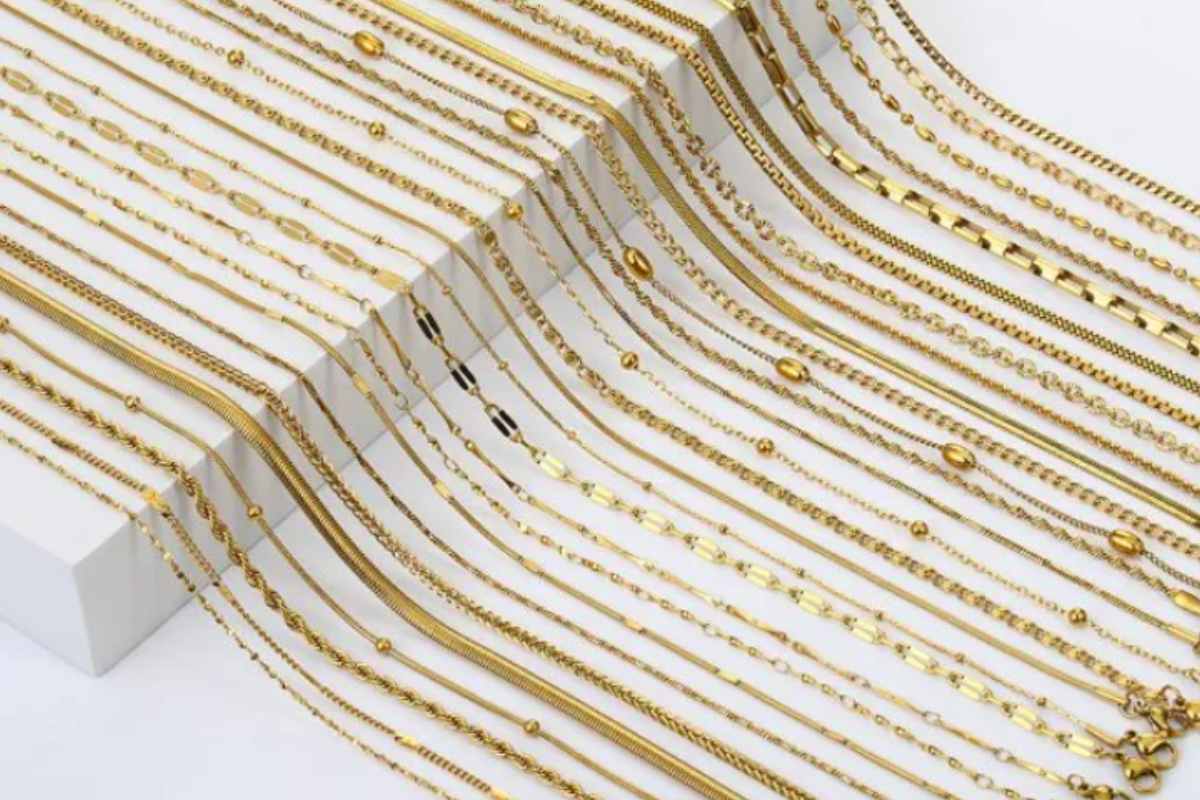
Jewelry production is a bit like building a tiny, shiny machine. Many steps, many specialists, all perfectly synced. Take a brass chain necklace as an example. It starts with a digital design, where the pattern, link size, and drape are modeled on screen so the piece hangs comfortably on the neck. That design is turned into molds or precision-cut metal strips, which are stamped or formed into individual links before being cut, shaped, and assembled into a smooth-moving chain.
The raw brass is tumbled, filed, and polished to make it feel good against the skin and cleaned to get the oils and dust off. Then, lastly, the chain passes through plating and finishing, where it is plated with a protective or decorative layer of metal, inspected once more in case of faults, and then it is ready to exit the workshop, a completed product of jewelry production magic.
How Does Star Harvest Ensure Quality in Jewelry Production?
Star Harvest’s commitment to quality is woven into every stage of their jewelry production, starting from the moment a design is locked in until the final product is packaged.
1. Open Mold
Everything starts when Star Harvest opens the mold and uses flexible silicone and precision machining. Every tiny detail of the design is locked in and stable for mass jewelry production.
2. Wax Injection & Waxing
Liquid wax is injected into that mold, and each wax piece is cleaned by hand. Take a brass chain necklace as an example: experts compare samples with the drawing and reject any that show bubbles, warping, or missing textures. They aim to ensure the necklace maintains perfect straightness and consistent thickness.
3. Wax Tree Assembly
The best wax pieces are fastened onto a central wax stem for a balanced “tree.” Engineers plan the layout so that metal will flow for fewer defects across the whole jewelry production batch.
4. Plaster
After preparation, the tree is encased in specific plaster slurry under strict timing and mixing restrictions. This heat-resistant mold keeps Star Harvest’s casting edges clean and sharp.
5. Dewaxing
After the plaster sets, the tree goes through controlled heating so the wax melts out for a clean internal cavity that keeps dimensions true and avoids rough inner walls in jewelry production.
6. Sand Foundry
For designs that suit it, the team also uses sand foundry setups, packing and venting the sand molds correctly so that each pour fills fully, holds texture well, and keeps porosity under control.
7. Plaster Removal
When the metal has cooled, workers break away the plaster in stages. Furthermore, they evaluate each cluster visually and by touch, and accordingly, miscasts, concealed chips, or surface pits are caught before they move deeper into jewelry production.
8. Wax Tree Removal
Then, the metal parts are cut off the tree at exact spots, gates are trimmed back, and contact marks are smoothed to avoid stressing joints and prepare each piece for links, clasps, or stones.
9. Assembly
Now separate parts come together, and meanwhile, Star Harvest’s team assembles chains, clasps, and components while checking fit, movement, and wearer comfort. Consequently, the structure of each jewelry production design is always reliable in daily use.
10. Welding
Critical connections are brazed or soldered after assembly, and in-line QC workers sample items every hour to assess weld strength and neatness to avoid weak areas beneath surface treatments.
11. Finishing
After welding, specialists shape and fine-finish items to straighten curvature and smooth transitions so they fit comfortably and provide a clean platform for jewelry production.
12. Copper Plating
Once the structure is sound, a copper underlayer is applied as a bonding base, and technicians use tools, including X-ray thickness gauges and salt-spray tests, to be sure adhesion and corrosion resistance meet Star Harvest’s jewelry production standards.
13. Type Printing
After the base layer is ready, laser or stamping adds branding and compliance marks. Operators check logo location, clarity, and depth against the order spec for readable and durable marks.
14. Polishing
Next comes polishing, and that’s where mechanical and hand processes build the final shine or matte look. Moreover, inspectors watch for swirl marks, missed corners, or color differences so the finish matches the approved jewelry production sample exactly.
15. Plating
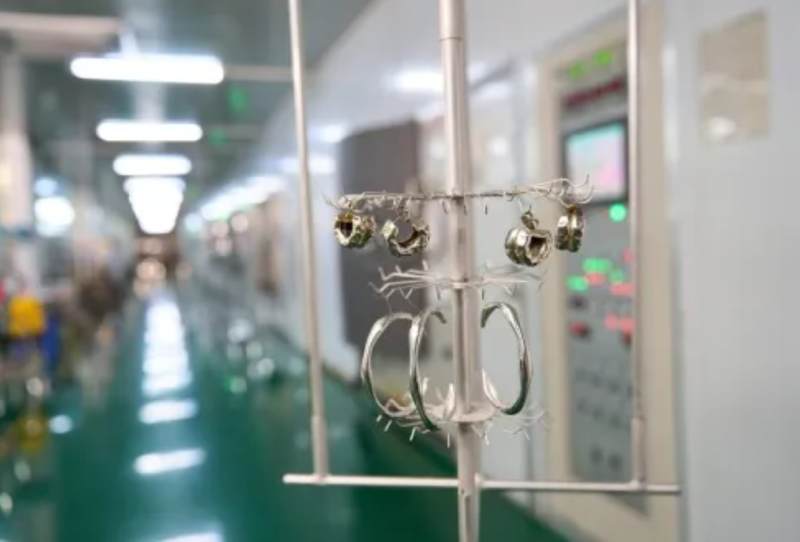
To close the loop in that single workflow picture, the final decorative plating is applied in tightly monitored baths, and Star Harvest checks coating thickness, wear performance, and allergy compliance so that only fully verified pieces move on to packaging.
Certifications of Star Harvest by Real Customer Cases
Responsible Jewelry Council (RJC)
Star Harvest has been certified by RJC, which implies that they are conscientious in sourcing and production in the supply chain. For one client starting a collection of brass chains, the RJC certification also enabled the brand to say with confidence that every single link of the chain can be traced back to raw material to finish, and also made the launch of the collection convincing.
ISO 9001 Quality Management System
They also hold ISO 9001 certification to guarantee that their processes are in accordance with international quality management standards. In practice, a stainless-steel pendant order for a DTC brand accomplished a less than 0.5% defect rate during mass production. Note that the ISO framework helped ensure consistency in their jewelry production workflow.
SA8000 Social Responsibility Standard
Star Harvest has SA8000 certification, so they satisfy global standards for labor rights, safety, and ethical production. One European brand working with them appreciated this certification, as it let the brand communicate ethical manufacturing to consumers in their plated brass line.
BSCI Factory Social Audit
They are BSCI-audited, which deals with social responsibility in the factories (working hours, wages, conditions, etc.). For a global retailer that selected Star Harvest for jewelry production, this helped them overcome their own retail-audit standards as well as fulfill ESG obligations.
Compliance with ®California Proposition 65 and REACH
The company’s products follow California 65 and REACH standards. That means materials and plating fulfill chemical safety requirements. A fast-fashion brand working with Star Harvest for a gold-plated chain range was able to approve shipments for the US and EU markets without repeated retesting. That saved both time and cost in their jewelry production cycle.

Final Words
If you’re ready to make your ideas real pieces, including but not limited to unique lost wax casting jewelry concepts and full lines of lost wax casting rings, just reach out to Star Harvest and talk through what you need. Their team can walk you through options, answer questions, and help you find a solution that fits your brand, your budget, and your timeline.
Also Read: How to Choose the Right Skin Care Gift Set